Your kitchen utensils come into contact with your food every day. From spatulas and cutting boards to cookware and food-storage containers, the materials you choose can become an important part of creating a healthier home.
You don’t need to replace everything in your kitchen at once. Start by replacing the items you use most often, especially products that are melted, scratched, damaged, or regularly exposed to high heat.
In this guide, we’ll look at some common kitchen materials and practical alternatives worth considering.
Why It’s Time to Ditch Plastic and Teflon
1. The Plastic Problem
Plastic might be convenient, but it has no business being near your food—especially when heat is involved. When plastic spatulas, utensils, or containers warm up, they leach BPA and phthalates straight into your meal. These notorious endocrine disruptors mimic natural hormones, wreaking havoc on your metabolism and reproductive system over time.
2. The Danger of “Forever Chemicals”
That quick-release non-stick pan comes with a hidden cost. At high temperatures, Teflon releases toxic PTFE and PFOA fumes. Worse, as soon as a non-stick coating gets even slightly scratched, it starts shedding microscopic toxic flakes right into your morning eggs and evening stir-fry. These “forever chemicals” don’t just go away; they accumulate in your body and the environment for decades.
Time-Tested, Toxic-Free Alternatives
Protecting your family’s health doesn’t require complex gadgets. You just need to return to reliable, time-tested materials.
Stainless Steel: The Chef-Approved Gold Standard
Ever wonder why professional kitchens run almost entirely on stainless steel? It’s completely non-reactive, meaning your food stays pure.
Why it’s a healthy choice: Premium stainless steel (especially clad options with an inner aluminum or copper core) provides fast, even heating without the risks. It won’t rust, chip, flake, or leach chemicals into acidic dishes like tomato sauce. It’s ultra-durable, easy to sanitize, and built to last a lifetime.
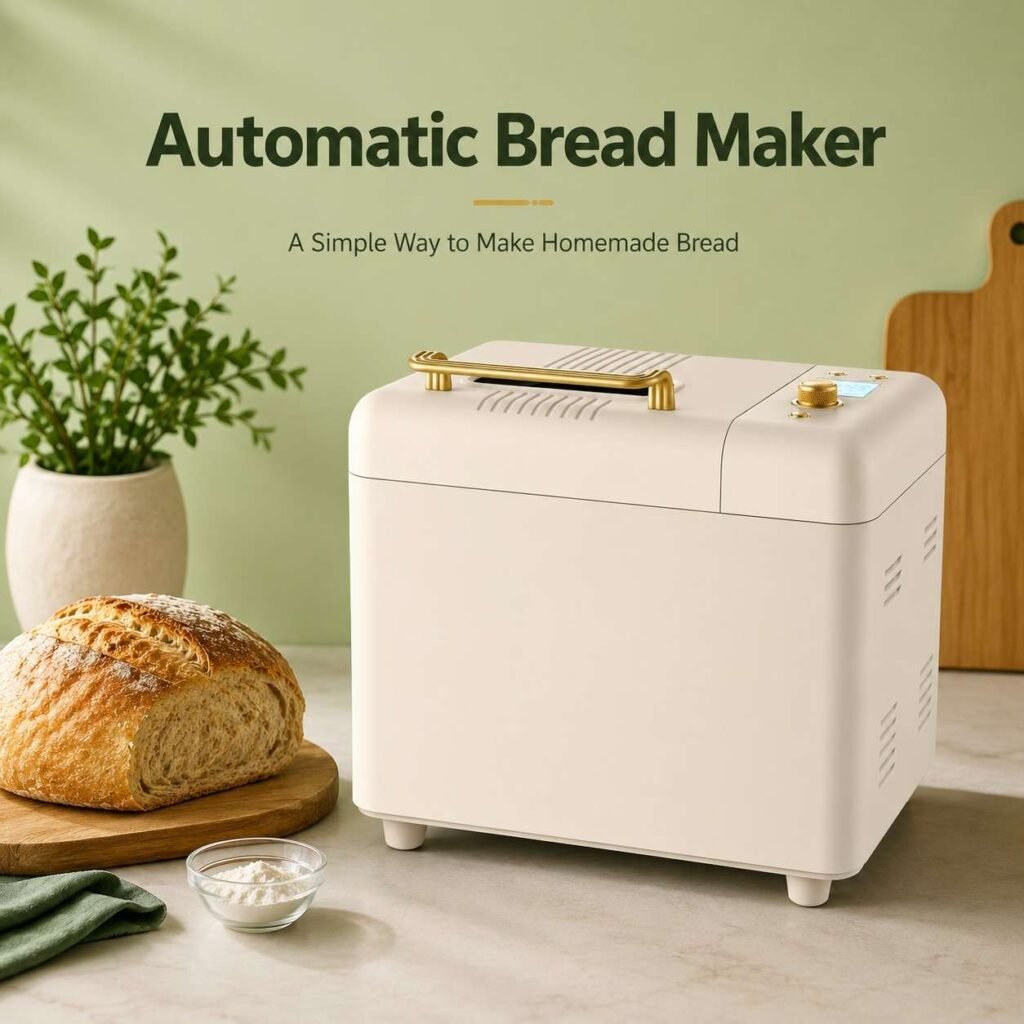
Automatic Bread Maker
A Simple Way to Make Homemade Bread
Most store-bought bread is packed with hidden sugars, industrial seed oils, and chemical preservatives to extend shelf life. Baking your own bread at home is the ultimate way to control your ingredients, but who has the time for manual kneading?
That’s where a premium, non-toxic automatic bread maker comes in.
Why We Like It
Ceramic Nonstick Pan: A good option if you’re looking to avoid traditional PTFE/Teflon-style nonstick coatings.
Multiple Baking Programs: Make different types of bread, dough, gluten-free recipes, cakes, jams and more.
Automatic Nut & Fruit Dispenser: Conveniently adds nuts, fruits and other ingredients during the baking cycle.
Dual Heating: Helps provide more even baking and browning.
Delay Timer: Set your bread maker in advance so fresh bread is ready when you want it.
Keep-Warm Function: Keeps freshly baked bread warm for a period after baking.
Best for: Families and anyone who wants fresh homemade bread while having more control over the ingredients.
Our pick: Look for an automatic bread maker with a PTFE-free ceramic bread pan if avoiding traditional nonstick coatings is one of your priorities.
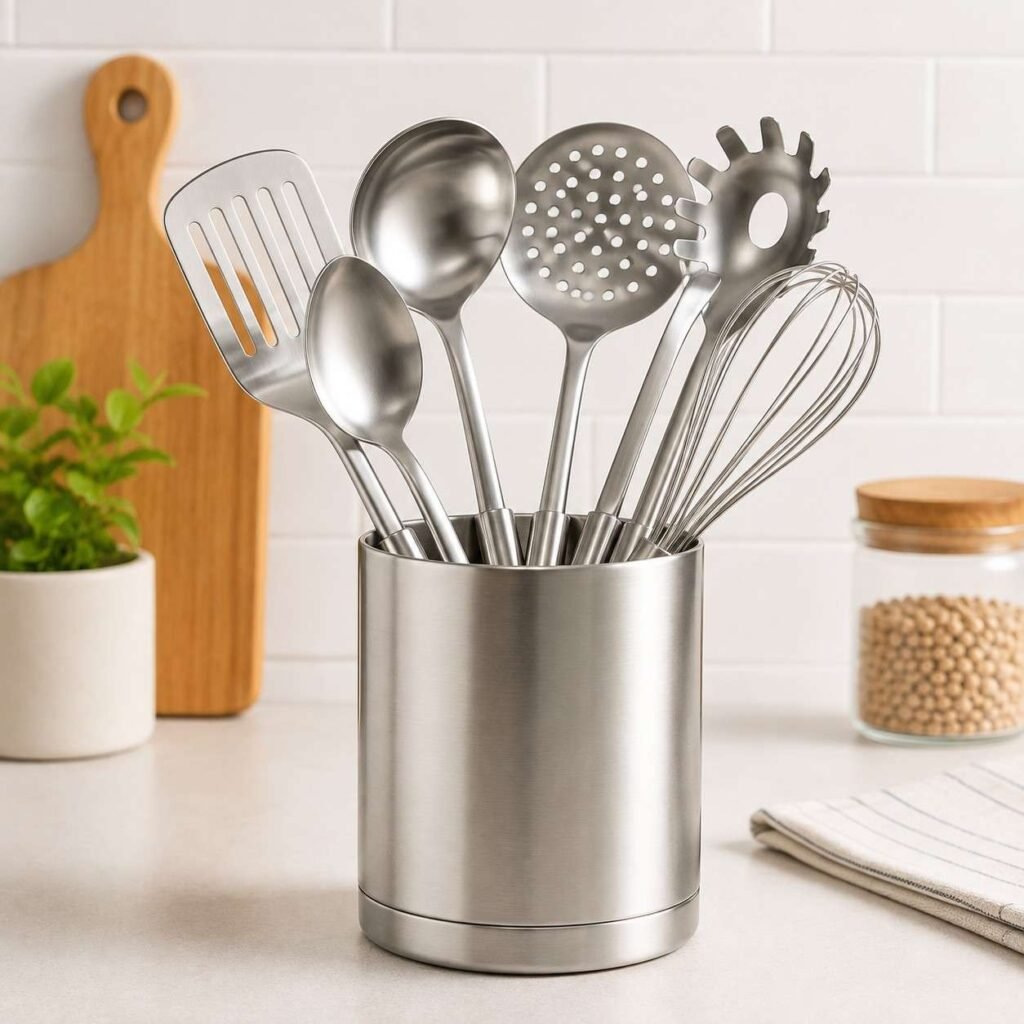
Stainless Steel Essential Utensil Set
Everyday Kitchen Tools Without Plastic
A practical set for everyday cooking, this stainless steel utensil collection gives you the essential tools you need without relying on plastic cooking utensils.
Why We Like It
Food-Grade Stainless Steel: Durable, heat-resistant, and designed for everyday cooking.
Complete Essential Set: Includes a slotted turner, ladle, skimmer, serving spoon, pasta server, potato masher, and egg whisk.
No Melting or Warping: Stainless steel handles everyday cooking temperatures without the melting concerns associated with plastic utensils.
Easy to Clean: Stainless steel is simple to wash and maintain, making it ideal for daily use.
Long-Lasting: A sturdy alternative to replacing worn or melted plastic utensils.
Best for: Anyone looking to replace plastic kitchen utensils with durable stainless steel tools.
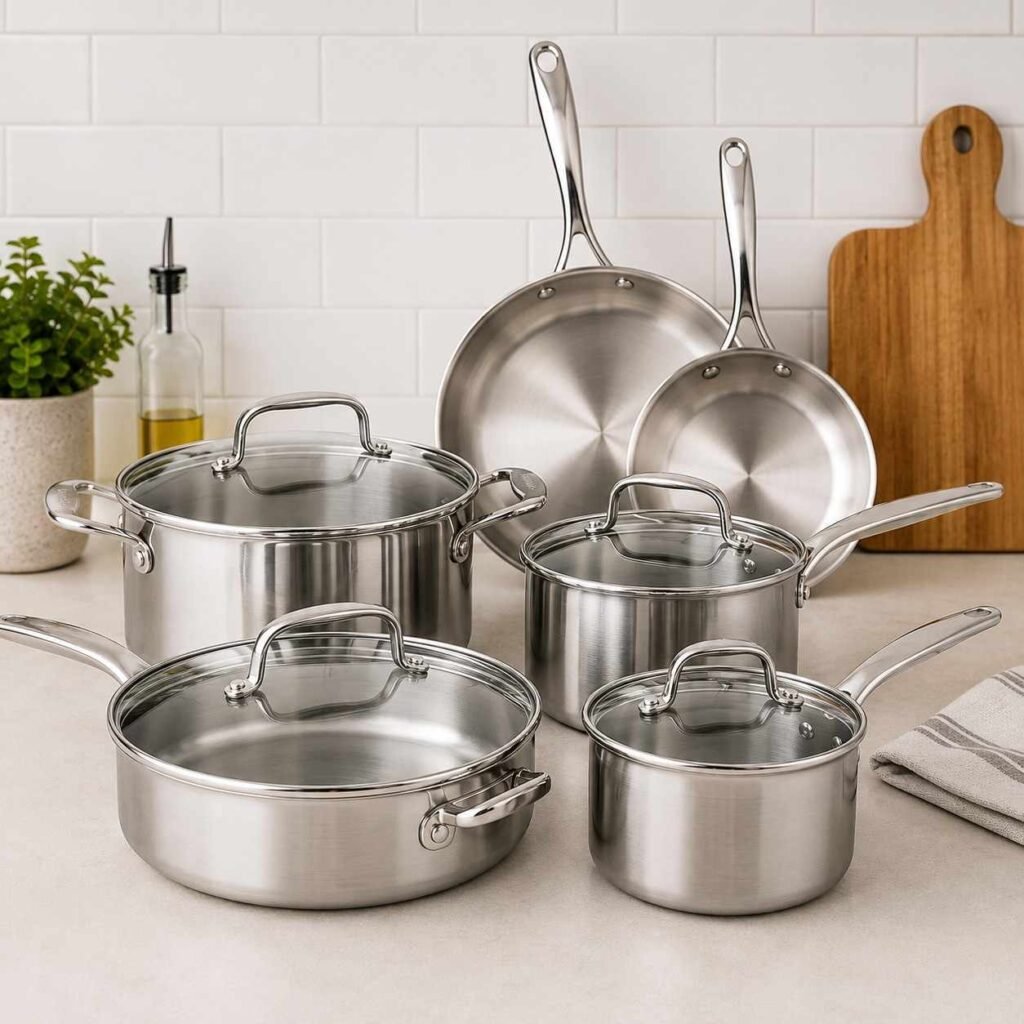
Multi-Clad Stainless Steel Cookware Set
A Durable Alternative to Traditional Nonstick Cookware
A complete stainless steel cookware set is a great foundation for a lower-plastic kitchen. Multi-clad construction is designed for durability and even cooking, while stainless steel provides a long-lasting cooking surface without a traditional nonstick coating.
Why We Like It
Stainless Steel Construction: Durable, heat-resistant, and made for everyday cooking.
No Traditional Nonstick Coating: A good choice if you’re looking to move away from Teflon-style coated cookware.
Built to Last: Stainless steel is resistant to scratching, warping, and everyday wear when properly cared for.
Versatile Set: Includes multiple pots, pans, and useful accessories for cooking everything from sauces and soups to everyday meals.
Metal-Utensil Friendly: Stainless steel cookware can generally be used with metal utensils without worrying about damaging a nonstick coating.
Best for: Anyone replacing traditional nonstick cookware with durable stainless steel.
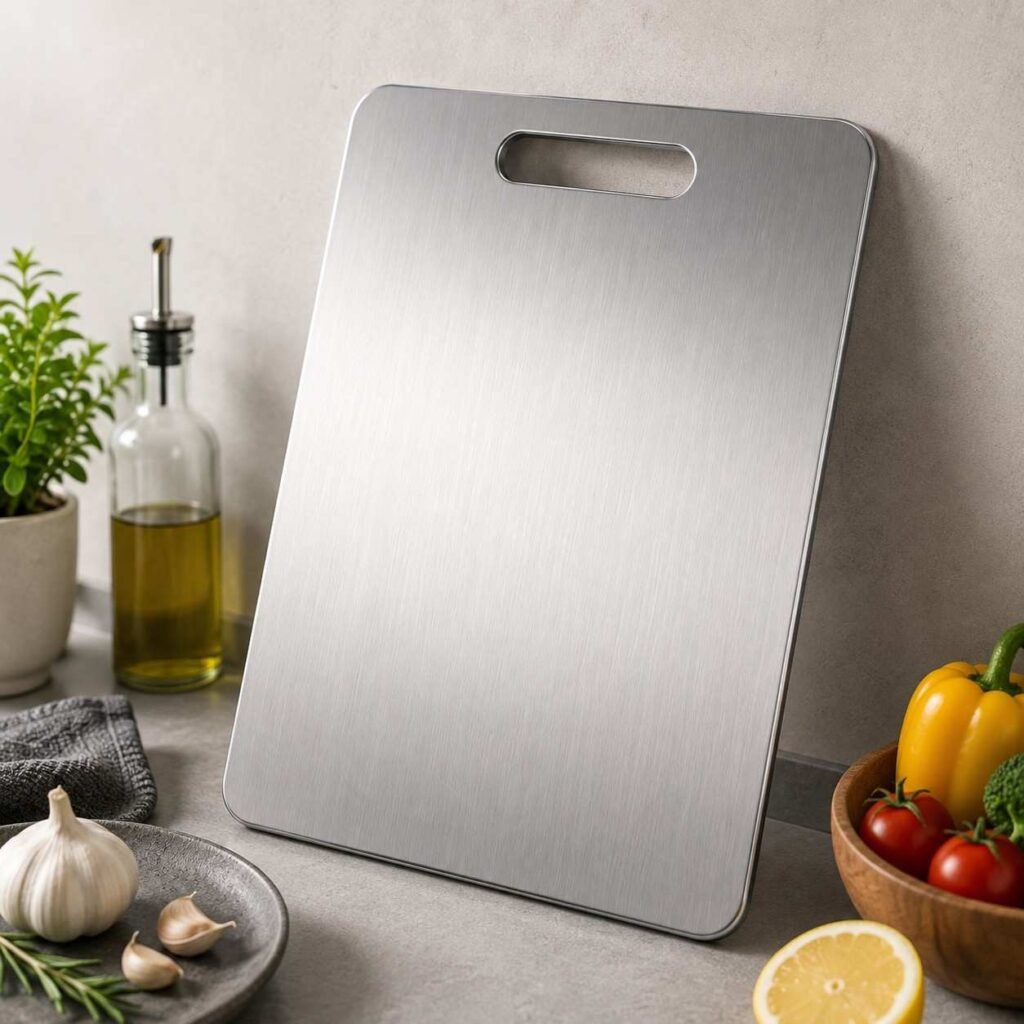
Stainless Steel Cutting Board
A Durable, Easy-to-Clean Prep Surface
If you want to move away from traditional plastic cutting boards, a stainless steel cutting board is a durable option for everyday food preparation. It’s easy to clean, resistant to stains and odors, and built for long-term use.
Why We Like It
Stainless Steel Construction: Durable, heat-resistant, and made for everyday cooking.
No Traditional Nonstick Coating: A good choice if you’re looking to move away from Teflon-style coated cookware.
Built to Last: Stainless steel is resistant to scratching, warping, and everyday wear when properly cared for.
Versatile Set: Includes multiple pots, pans, and useful accessories for cooking everything from sauces and soups to everyday meals.
Metal-Utensil Friendly: Stainless steel cookware can generally be used with metal utensils without worrying about damaging a nonstick coating.
Best for: Anyone replacing traditional nonstick cookware with durable stainless steel.
More Stainless Steel Kitchen Essentials
Once you’ve replaced the main plastic cooking tools and cookware, there are several other everyday kitchen items worth considering in stainless steel. These simple swaps are durable, easy to clean, and designed to handle regular kitchen use.
Here are some of the most useful stainless steel kitchen essentials to add to your kitchen:
- Stainless Steel Mixing Bowls — Durable, lightweight, and easy to clean for everyday food prep.
- Stainless Steel Colander — Great for washing produce and draining pasta without plastic.
- Stainless Steel Grater — A sturdy option for cheese, vegetables, ginger, and zest.
- Stainless Steel Vegetable Peeler — Simple, durable, and useful for everyday meal preparation.
- Stainless Steel Baking Sheets — Great for roasting vegetables, baking, and sheet-pan meals.
- Stainless Steel Food Storage Containers — Reusable and durable for storing leftovers and packed meals.
- Stainless Steel Sieve — Useful for straining sauces, sifting dry ingredients, and rinsing food.
- Stainless Steel Tea Infuser — A reusable alternative to disposable tea bags and plastic infusers.
Cast Iron: The Classic Kitchen Powerhouse
Cast iron is one of the most durable cookware materials you can add to your kitchen. When properly seasoned, it develops a naturally slick cooking surface and can last for generations.
It’s especially useful for high-heat cooking, searing, frying, roasting, and baking.
Here are some cast iron essentials worth considering:
1. Cast Iron Skillet
A versatile everyday skillet for searing, frying eggs, sautéing vegetables, and baking.
Why we like it: Excellent heat retention and incredibly durable.
2. Enameled Cast Iron Dutch Oven
A versatile pot for soups, stews, braises, sauces, and slow cooking.
Why we like it: The enamel surface doesn’t require traditional cast-iron seasoning and is convenient for acidic foods.
3. Cast Iron Grill Pan
Bring grilled-style cooking indoors with a ridged cast iron grill pan.
Why we like it: Great for creating seared grill marks on vegetables, meat, and fish.
4. Cast Iron Smashed Burger Press
A heavy-duty tool for making crispy, thin smash burgers on a skillet or griddle.
Why we like it: Its weight helps flatten burgers quickly and evenly for that classic crispy crust.
5. Cast Iron Wok
A sturdy alternative for stir-frying, sautéing, and high-heat cooking.
Why we like it: Excellent heat retention makes it useful for quick, high-temperature cooking.
6. Cast Iron Tortilla Press
Useful for making homemade tortillas, flatbreads, and other pressed dough.
Why we like it: Heavy-duty construction provides consistent pressure and can last for years.