The Hidden Dangers in Your Kitchen
Your kitchen should nourish your family—not expose them to harmful chemicals. Many everyday items like plastic utensils, non-stick cookware, and low-quality metal tools can release toxins into food, especially when heated or scratched. Over time, this exposure may affect your health.
Why Switch to Non-Toxic Kitchenware?
Choosing safer kitchen tools helps reduce exposure to harmful chemicals such as BPA, phthalates, PFAS, and heavy metals. These substances have been linked to hormone disruption, organ stress, weakened immunity, and other long-term health concerns.
Possible Health Risks
- Hormone imbalance: Chemicals like BPA and phthalates can interfere with your body’s natural hormones.
- Brain and organ health: Heavy metals may affect brain function and place extra strain on the liver and kidneys.
- Cancer concerns: Some non-stick coatings containing PFAS have been associated with a higher risk of certain cancers.
- Overall wellness: Long-term exposure may contribute to immune, metabolic, digestive, and cardiovascular problems.
Make the Safer Choice
The good news is that protecting your family is simple. Replacing toxic kitchen utensils with safer materials like stainless steel, cast iron, glass, bamboo, and food-grade silicone can significantly reduce your daily exposure to harmful chemicals and create a healthier kitchen.
Toxic Kitchen Utensils (Nylon/Plastic Spatulas & Cooking Spoons)
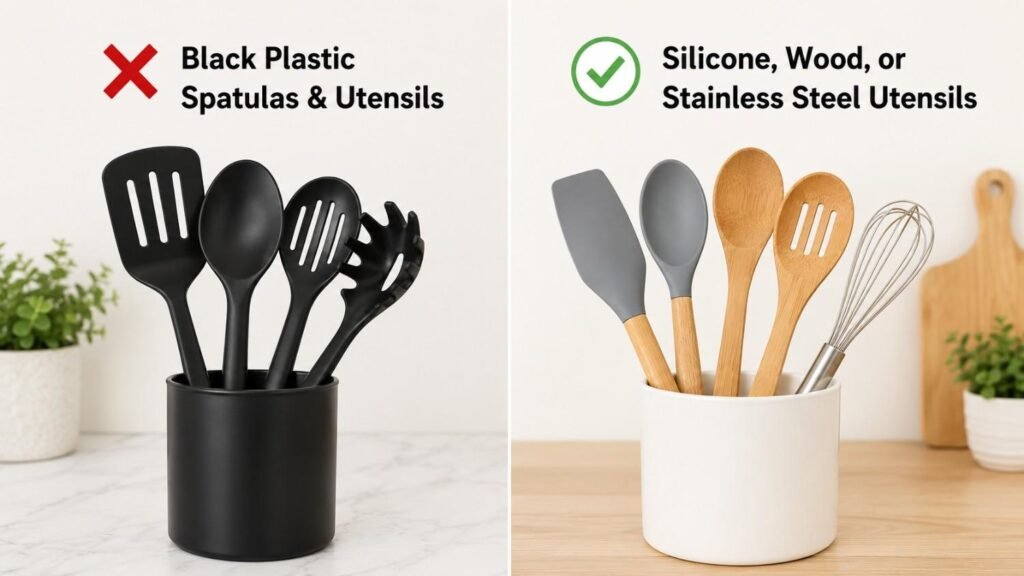
Why it’s harmful: Many black nylon or plastic utensils are made from recycled plastics that can contain traces of flame retardants, heavy metals, or degradation products. Even food-grade plastics, especially when heated, can leach chemicals or shed microplastics directly into your food. Some studies suggest a potential link between chemicals in black plastic and hormone disruption.
Alternative Solution:
Silicone: Look for 100% food-grade silicone, which is inert, doesn’t react with food, and can withstand high heat without melting or leaching.
Wood/Bamboo: Naturally antibacterial, durable, and won’t scratch cookware. Ensure they are uncoated or treated only with natural food-safe oils.
Stainless Steel: Extremely durable, non-reactive, and easy to clean. Perfect for many cooking tasks, but be mindful when using on coated non-stick pans (see below).
Toxic Black Plastic Trays & Food Containers
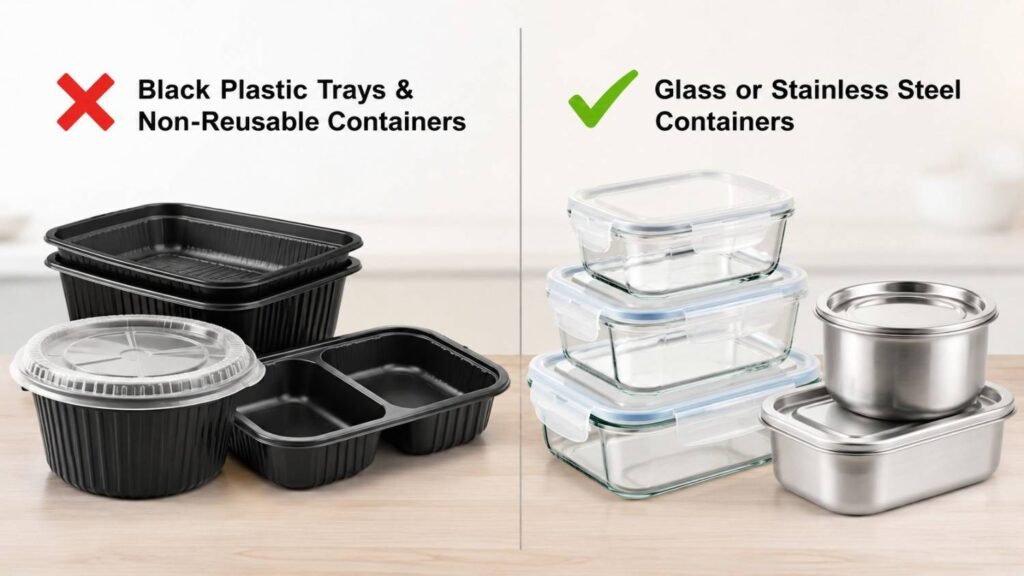
Why it’s harmful: Black plastic food packaging, often used for take-out or pre-packaged meals, is frequently made from high-impact polystyrene (HIPS) which might be mixed with recycled electronic plastics. These can contain problematic chemicals. Furthermore, they are often not designed for reuse, and heating them can cause significant chemical migration or melting.
Alternative Solution:
Glass Containers: Glass is one of the safest food storage options. It’s non-reactive, non-porous, and doesn’t absorb odors. Look for borosilicate glass for temperature resistance.
Stainless Steel Containers: Ideal for durable, lightweight storage and on-the-go meals. Make sure to choose food-grade stainless steel. Note that they cannot be used in a microwave.
Non-Stick Cookware (Worn or Damaged Coatings)
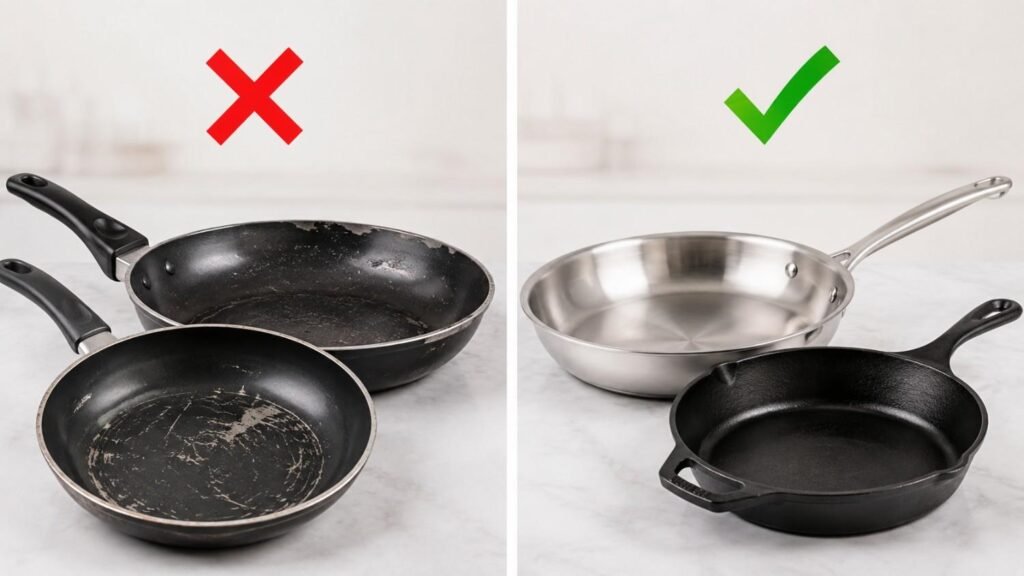
Why it’s harmful: Conventional non-stick coatings (like Teflon, made from PTFE) are generally considered safe at standard cooking temperatures. However, when these coatings are overheated (above 500°F/260°C) or, more commonly, become scratched or worn, they can start to break down. This can release toxic fumes or microscopic particles of the coating into your food. Historically, these coatings also involved PFAS/PFOA chemicals. Even newer PTFE formulations are being scrutinized.
Alternative Solution:
Stainless Steel: Durable, non-reactive, and allows for even heating. Best for general sautéing, boiling, and simmering. Can be made non-stick with proper temperature control and enough fat.
Cast Iron (Seasoned): A naturally non-stick surface when seasoned properly. Known for excellent heat retention. Can even add small amounts of beneficial iron to food. Best for searing meat and baking.
Carbon Steel: Similar to cast iron but lighter and more responsive to temperature changes. Needs seasoning. Popular for woks and fry pans.
Enameled Cast Iron/Steel: A safe, non-reactive ceramic coating over metal. Great for braising, slow cooking, and one-pot meals.
Plastic Cutting Boards (Used/Scratched)
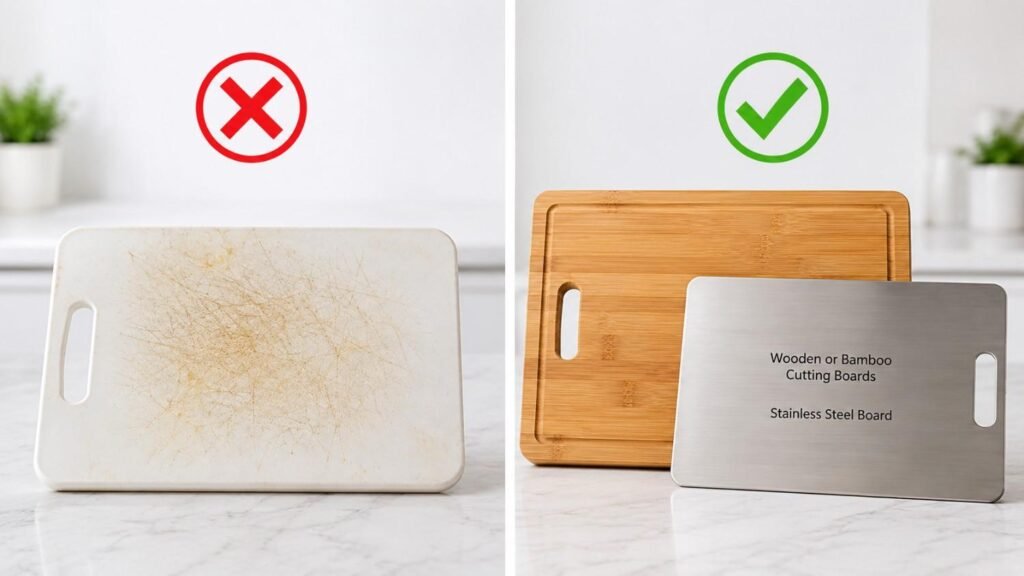
Why it’s harmful: Over time, knife blades create deep grooves in plastic cutting boards. These grooves are difficult to clean thoroughly and become breeding grounds for bacteria. Crucially, the slicing action on the plastic surface sheds millions of microplastics and nanoplastics which contaminate your food. Some studies also show chemical migration from plastic boards can be high.
Alternative Solution:
Wood: Naturally antimicrobial, durable, and relatively gentle on knife blades. Opt for hardwoods like maple, walnut, or cherry. Look for “end-grain” for superior longevity and self-healing properties against knife cuts. Treat with food-safe oils.
Bamboo: A highly renewable resource that is durable and less porous than some woods, making it resistant to bacteria. Be sure to check for formaldehyde-free adhesives.
Stainless Steel: Non-porous, highly durable, and easy to sanitize, making it resistant to absorbing food odors, liquids, and bacteria. It also won’t develop deep grooves like plastic.
Plastic Sponges & Dish Scourers
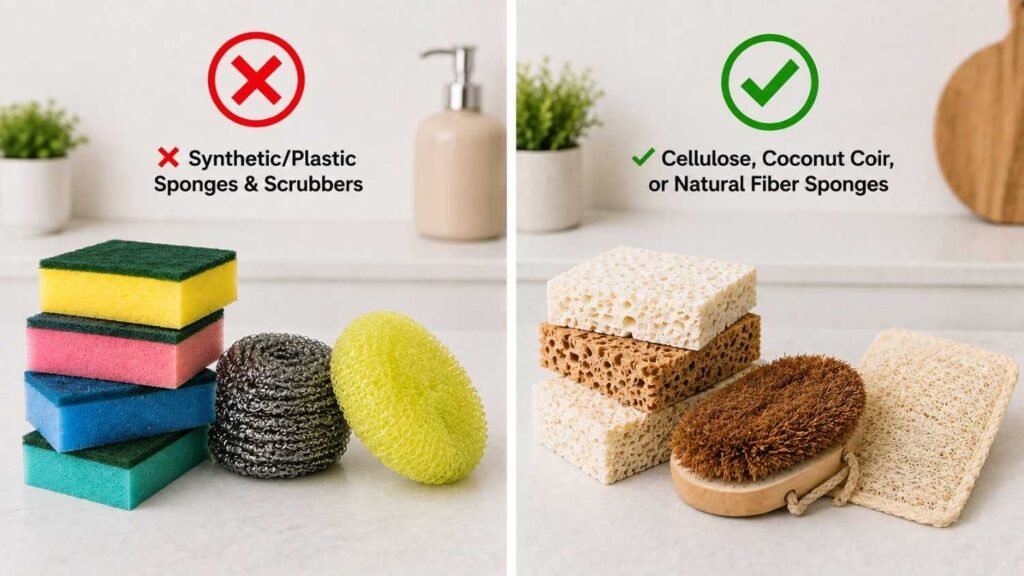
Why it’s harmful: Standard yellow-and-green sponges are made of synthetic foam (polyurethane or polyester). As you scrub cookware, heat and friction tear off micro-particles of plastic that wash down the drain into the water system or stick directly to your dishes. They also trap moisture and harbor bacteria rapidly.
Alternative Solution:
Plant-Based Cellulose Sponges: Made from natural wood pulp; fully biodegradable and plastic-free.
Plastic Electric Kettles
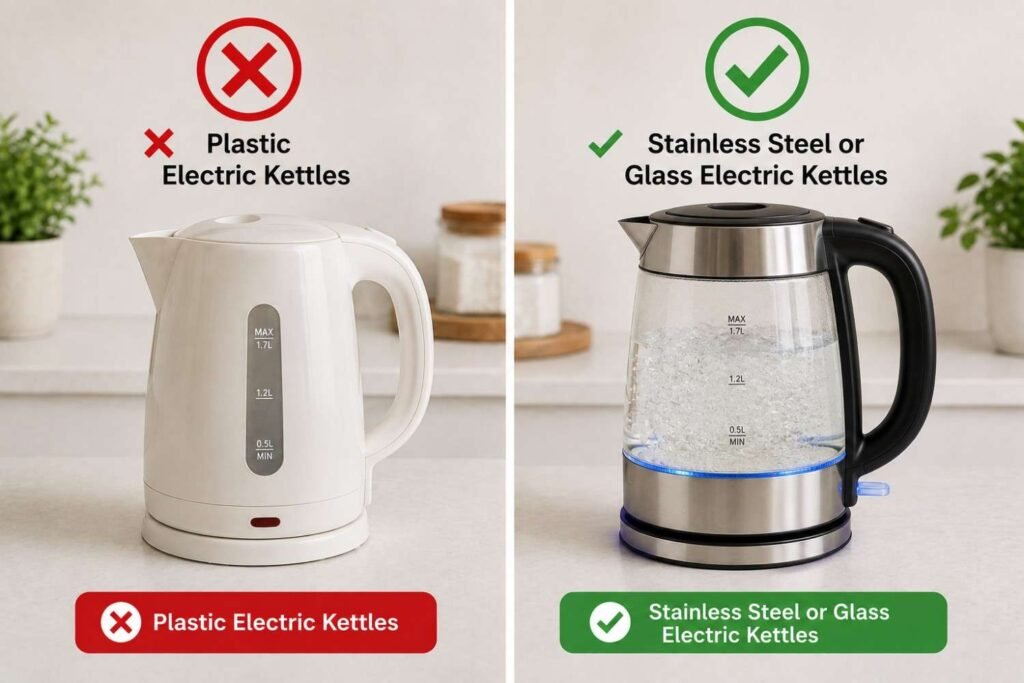
Why it’s harmful: Heating water to boiling temperatures inside a plastic interior causes high rates of chemical leaching and microplastic release. Every cup of tea or coffee boiled in a plastic kettle carries millions of microscopic plastic fibers.
Alternative Solution:
Full Stainless Steel Interior Kettles: Ensure the inside (including the spout and lid underside) is completely 100% stainless steel with no plastic water-level windows inside.
Borosilicate Glass Kettles: Clean, completely non-reactive, and allows you to see the water level without plastic markers.
Air Fryers with Non-Stick Coated Baskets
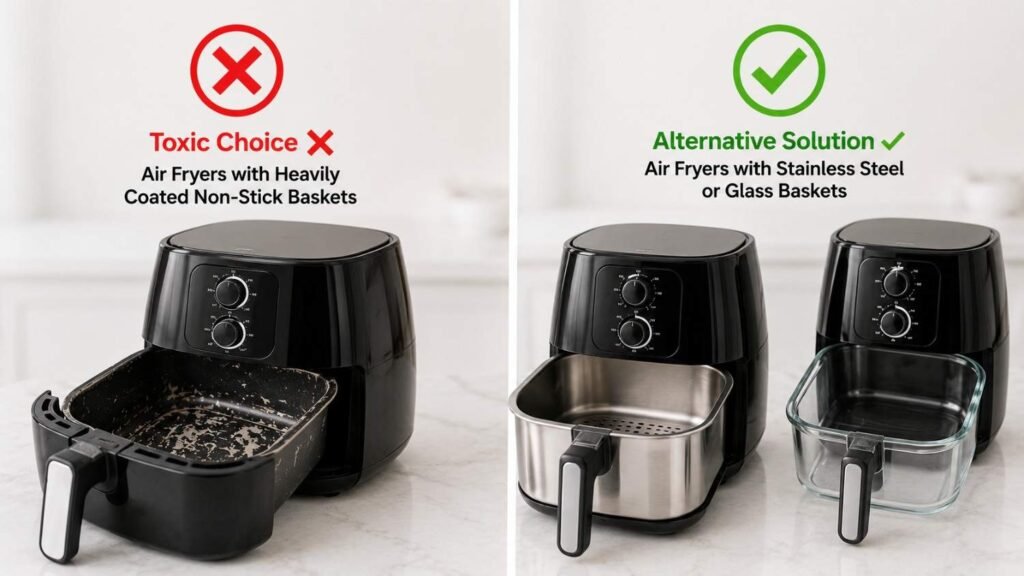
Why it’s harmful: Similar to non-stick cookware, the baskets of many popular air fryers are heavily coated with PFAS (per- and polyfluoroalkyl substances) for easy cleaning. The high temperatures and intense air circulation can potentially degrade these coatings over time, releasing microparticles or gases. PFAS are known endocrine disruptors and persistent in the environment and body.
Alternative Solution:
Stainless Steel Baskets/Racks: Some higher-end or specialized models offer stainless steel alternatives, or aftermarket stainless steel baskets/racks can sometimes be found.
Glass/Ceramic Models: A smaller number of air fryer models utilize glass baskets or high-quality, potentially non-toxic ceramic coatings (verify claims carefully).
Automatic Bread Maker (Non-Toxic Pan)
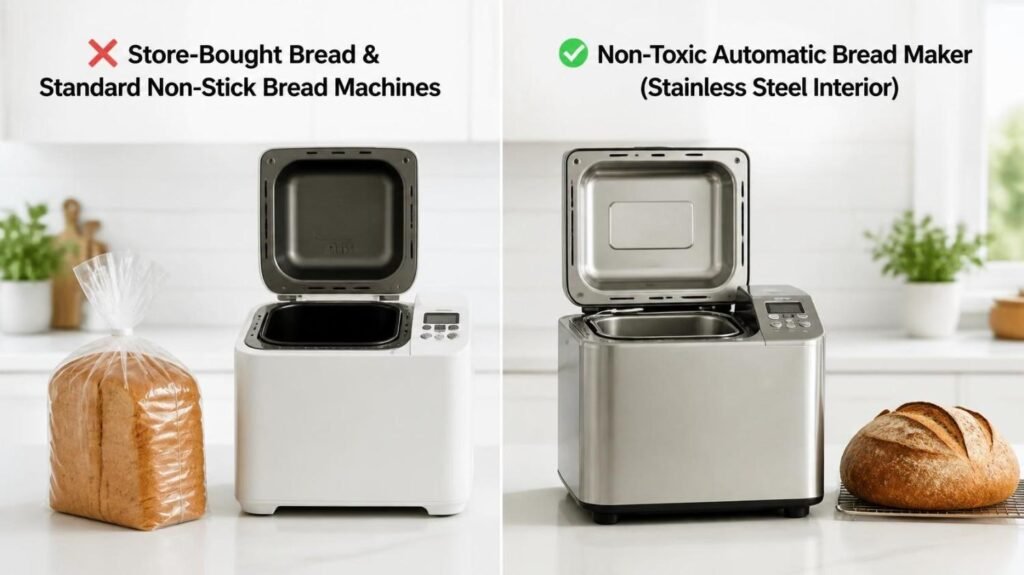
Why it’s harmful: Store-bought bread is full of preservatives and industrial oils, while standard bread machines use cheap Teflon coatings that scrape off from constant blade spinning.
Alternative Solution:
Stainless Steel Bread Maker: Allows you to bake fresh, clean, preservative-free bread at home using a non-toxic baking bucket.
Aluminum Foil and Untreated Aluminum Cookware
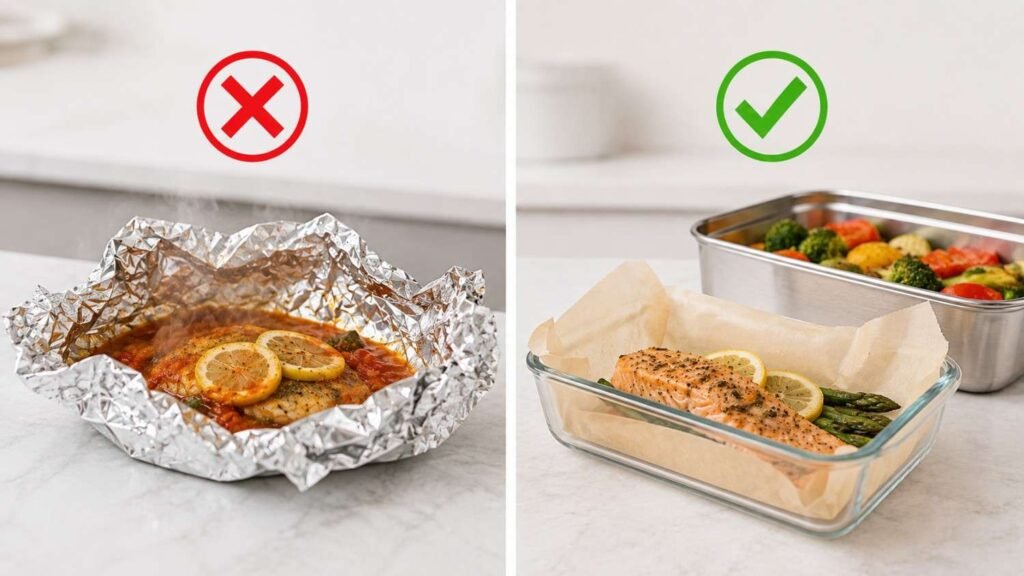
Why it’s harmful: Cooking food in aluminum foil, especially at high temperatures or with acidic foods (like tomatoes, lemon juice, citrus, or vinegar), can cause significant amounts of aluminum to leach into the food. Accumulation of aluminum has been linked to potential neurotoxic effects and is a concern for bone health and kidney function. Untreated aluminum cookware can also react similarly.
Alternative Solution:
For Baking: Use food-grade parchment paper to line baking sheets instead of foil.
For Cooking: Utilize non-reactive cookware like stainless steel, glass baking dishes, or enameled cast iron.
For Storage: Store acidic or hot food in glass or stainless steel containers instead of wrapped in foil.
Silver-Plated Cutlery and Worn Metal Spoons
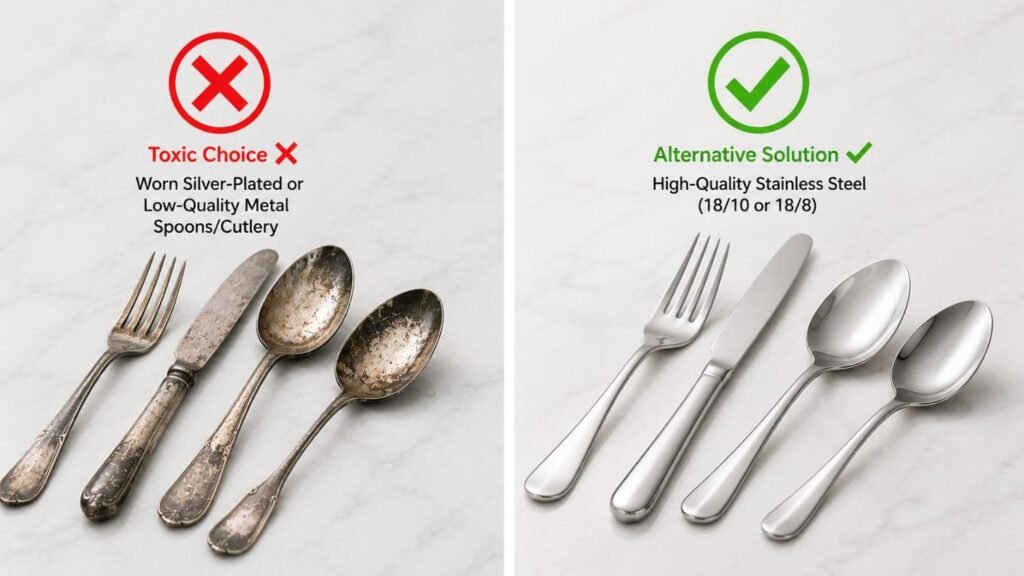
Why it’s harmful: Silver-plated cutlery can wear down over time, exposing the base metal (often an alloy that can contain nickel, copper, or other substances). These underlying metals can react with food, especially acidic or hot dishes, causing metallic tastes and potential ingestion of unwanted metals. Some individuals can also have allergies to underlying metals like nickel.
Alternative Solution:
High-Quality Stainless Steel: Look for flatware marked as “18/10” or “18/8”. The numbers refer to the percentage of chromium and nickel, respectively. 18/10 is considered high quality and very corrosion-resistant. It’s inert, durable, and safe for everyday use.
Low-Quality Plastic Water Bottles (e.g., PET bottles)
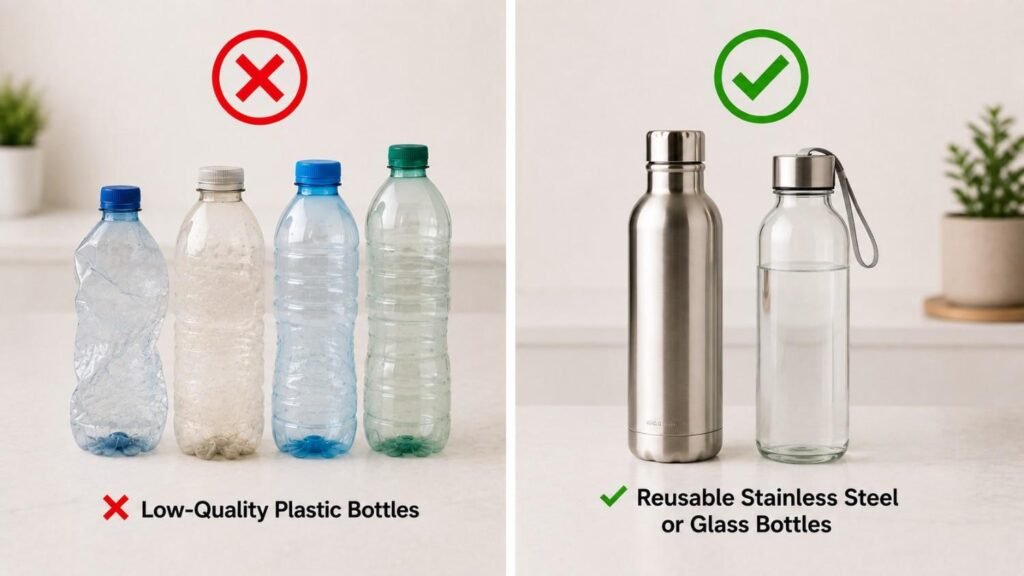
Why it’s harmful: Cheap plastic bottles, often made from PET (polyethylene terephthalate, #1) or potentially even #7 (which may contain BPA/BPS), are not intended for multi-use or reuse. They can degrade over time, especially when exposed to heat, sunlight, or simple wear and tear. This can result in microplastics and chemical leaching into the water. Even “BPA-free” plastic bottles can have alternative harmful compounds or are prone to breaking down into microplastics. Reusing single-use bottles (marked #1) is particularly discouraged as they are designed to be used only once.
Alternative Solution:
Stainless Steel (Food-Grade): Look for food-grade, single-wall or vacuum-insulated stainless steel bottles (18/8 or 18/10). They are inert, durable, and don’t affect water taste.
Glass Bottles: Pure and non-reactive. Look for borosilicate glass for temperature resistance, perhaps with a protective silicone sleeve.
Plastic Measuring Cups & Pitchers
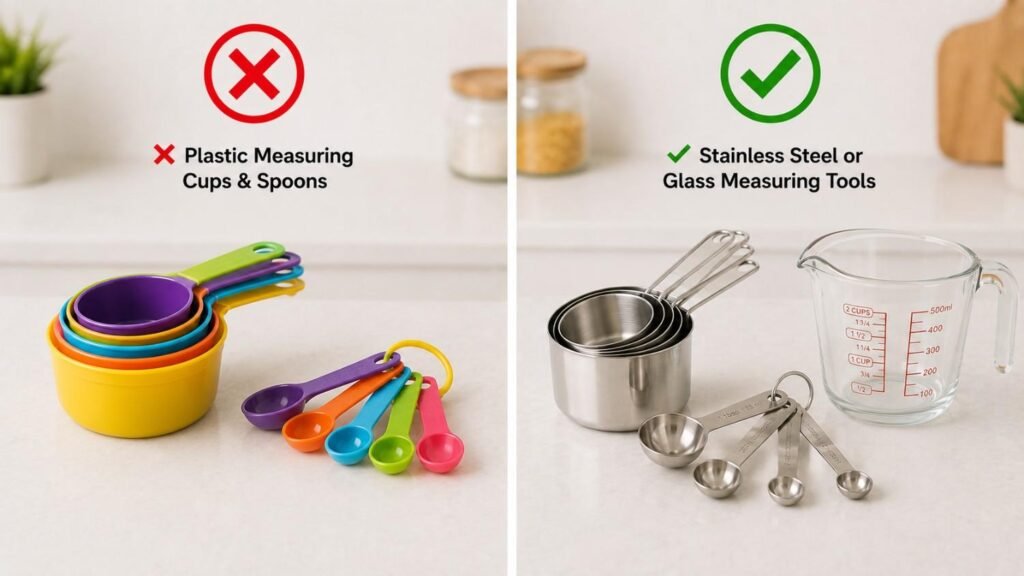
Why it’s harmful: Plastic measuring cups—especially when used for hot liquids, melted butter, or acidic ingredients—can shed microplastics and leach plasticizers into your food. The high surface friction from dry ingredients (like rice or sugar) can also scrape off tiny plastic particles over time.
Alternative Solution:
Stainless Steel: Virtually indestructible, easy to sanitize, and won’t absorb food oils or smells.
Glass Measuring Jugs: Perfect for hot liquids, non-porous, and clear to read.